Sponsor Me!
In these mad times we find ourselves in people with mental health problems have never been more in need of help, and with the NHS’ services at breaking point it’s charities like Dare 2 Express that try to fill in the gaps and give people the support they need. That’s why I’m trying to raise money for Dare 2 Express, and you can sponsor me using my Just Giving page.
Your donation could literally save someone’s life!
Week 12
Day 54
Day 54 and day 24 of my January challenge. Almost up to a half marathon (and more) a day now…gulp!
After a few miles getting through Livingstone, the day’s route headed out through some wonderful country lanes with nothing but fields and hills in the distance to look at. Wonderful!
Near the end of the day’s run I passed Cobbinshaw Reservoir. The reservoir was built by James Jardine to feed the Union Canal via the Bog Burn, Murieston Water, and through Mid Calder to the Almondell Aqueduct and Lin’s Mill Canal Feeder which feeds into the canal just east of the Almond Aqueduct.
Not too many more days left of the challenge I set myself this month. I think I’ll be glad when it’s finally done and I’m back to the more sensible 5-mile-a-day average.
Route
[sgpx gpx=”/wp-content/uploads/gpx/virtual-jogle-day-54.gpx”]
Route Video
Below you can see a video of the route, showing Google Street View images from along the route.

Photos
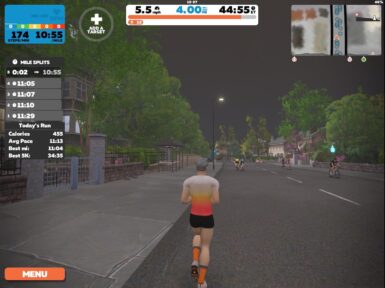
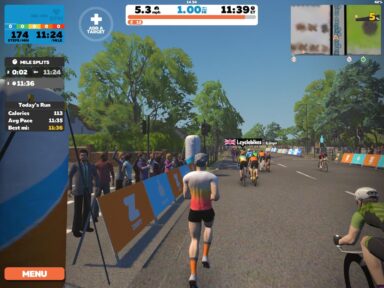
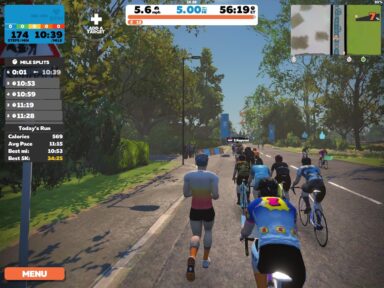
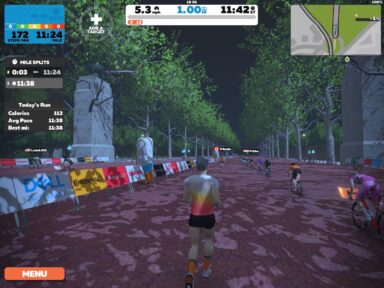
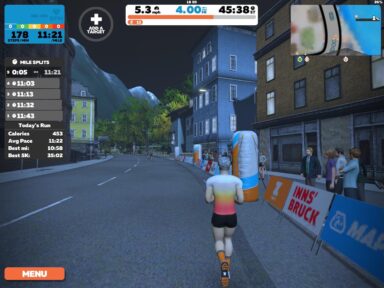
Some photos from my virtual run.





Day 55
Day 55 and day 25 of my January challenge and [pretty much] a half marathon completed today.
Another day taking me along the country lanes again, passing through Carnwath, Libberton, Quothquan, finishing up the other side of Thankerton.
At the centre of Carnwath is Carnwath Cross, the mercat cross, set back a little where the Main Street widens to form the Market Square. This was erected by the 5th Lord Somerville in 1516 to celebrate the granting of burgh status to the village in 1514.
Quothquan was formerly spelled Couth-Boan; Scottish Gaelic: A’Choitcheann, translated as “The Common”.
To the southwest of Quothquan is the 1,098-foot (335 m) high Quothquan Law, topped by the remains of a hill fort. The hill comprises two elements, one is an enclosure to the southeast which is around 400 by 230 feet (120 by 70 m). The other is a lower larger annexe to the northwest, with double ramparts and a medial ditch which has mostly been filled in.
Thankerton’s name derives from an early feudal lord called Thancard the Fleming, and means Thancard’s enclosure. Ton is Old English for an enclosed settlement, and evolved into the modern English word town. Thancard was probably one of the Flemish knights who accompanied David I to Scotland to claim the Scottish throne and as such was rewarded with grants of land in Scotland.
Route
[sgpx gpx=”/wp-content/uploads/gpx/virtual-jogle-day-55.gpx”]
Route Video
Below you can see a video of the route, showing Google Street View images from along the route.

Photos
Some photos from my virtual run.


Day 56
Day 56 and day 26 of my January challenge, with today’s miles marking the point in the month where I’ll be running longer than a half marathon every day until the end of this month’s challenge!
The A73 was the start of today’s run, taking me through St John’s Kirk and passing Roberton before picking up the A702 to Abington. I carried on along the A702 to just beyond Crawford, following along the side of the A74(M).
Abington represents an historic gateway to Scotland dating back some 2000 years. From the time of the Romans up until the current day, the road passing by Abington follows an ancient Roman route, connecting the River Clyde in Abington to a roman fort at Musselburgh.
Early occupation of the area is supported by evidence of ancient Hill Forts standing guard over the Abington Stretch of the Clyde Valley as well as the medieval motte and bailey, discovered near the services on the M74.
Napoleon III is said to have stayed at the Abington hotel after a tiring day shooting grouse in 1839.
I broke through the 70 hour mark on my treadmill today, which is nuts. I’m getting very close to completing 40% of my total JOGLE mileage too, totalling 357.5 miles today, leaving me 580.2 miles left of the bigger challenge.
Still a long way to go…
Route
[sgpx gpx=”/wp-content/uploads/gpx/virtual-jogle-day-56.gpx”]
Route Video
Below you can see a video of the route, showing Google Street View images from along the route.

Photos
Some photos from my virtual run.




Day 57
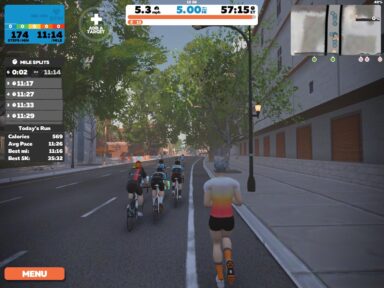
Day 57 and day 27 of my January challenge, and 14 miles completed today. This is beginning to get a bit tough now with the mileage I’ve got to do each day. This is [almost] getting as tough as my actual LEJOG walk now!
Pretty much 14 miles along the B7076 following the route of the A74(M) today, with nothing but the quiet road and wonderful scenery abound. Not a lot else to say about today’s route as it didn’t go through anywhere; no villages, towns or anything.
Route
[sgpx gpx=”/wp-content/uploads/gpx/virtual-jogle-day-57.gpx”]
Route Video
Below you can see a video of the route, showing Google Street View images from along the route.

Photos
Some photos from my virtual run.




Day 58
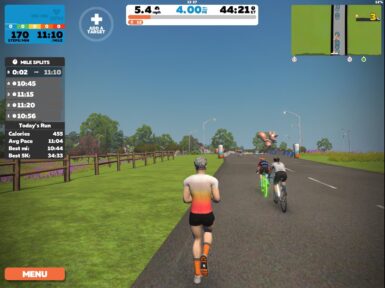
Day 58 and day 28 of my January challenge. My legs are definitely feeling it now. All of those memories from my LEJOG walk of waking up and shuffling around where I was staying to try and get my legs working, well, they’re all coming back now!
Another day running along the B7076, making my way down to the Scottish/English border. I’m getting very close now, which will mean I’ll have run the length of Scotland in the next day or so…mental!
Today’s route ended in Lockerbie, skirting around Beattock, passing Johnstonebridge and Hangingshaw along the way.
Johnstonebridge was named after the prominent local landowning family, the Johnstones, who caused a bridge to be built there over the River Annan.
Only three more days to go of this month’s challenge. I’ll make it, no doubt about that, but I think I’m goingt a couple of days off from running once I’m done for the month.
Route
[sgpx gpx=”/wp-content/uploads/gpx/virtual-jogle-day-58.gpx”]
Route Video
Below you can see a video of the route, showing Google Street View images from along the route.

Photos
Some photos from my virtual run.




Day 59
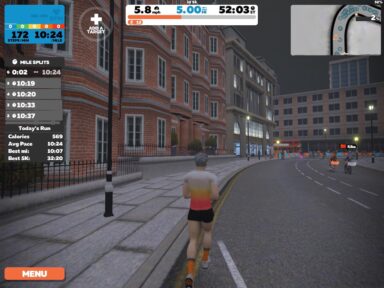
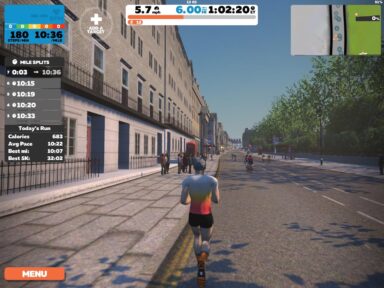
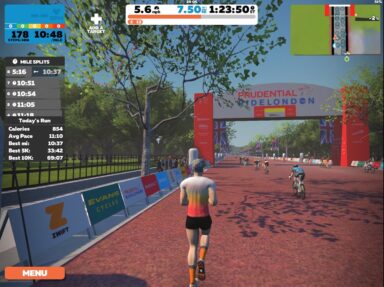
Day 59 and day 29 of my January challenge. Today was a struggle. With 15 miles to do I decided to split it into three 5 mile runs, which made it a bit easier. Still tough though, especially after the miles I’ve racked up so far this week!
I headed out Lockerbie on the B7076 – passing the Lockerbie Memorial – following alongside the A74(M). Today’s route would take me just outside Gretna and the border to England, passing Castlemilk, Yeskett, Ecclefechan (which always reminds me of an Anthrax song when I hear the name), Eaglesfield, and Kirtlebridge, before heading off on the smaller lanes, passing Hollee before finishing just outside Rigg.
Lockerbie has existed since at least the days of Viking influence in this part of Scotland in the period around 900. The name (originally “Loc-hard’s by”) means Lockard Town in Old Norse. The presence of the remains of a Roman camp 1 mi (2 km) to the west of the town suggests its origins may be even earlier. Lockerbie first entered recorded history in the 1190s in a charter of Robert de Brus, 2nd Lord of Annandale, granting the lands of Lockerbie to Adam de Carlyle. It appears as Lokardebi in 1306.
Lockerbie is known internationally as the place where, on 21 December 1988, the wreckage of Pan Am Flight 103 crashed after a terrorist bomb on board detonated. Eleven residents of the town were killed in Sherwood Crescent, where the aircraft’s wings and fuel tanks plummeted in a fiery explosion, destroying several houses and leaving a large crater, with debris causing damage to other buildings nearby. All 259 people on the flight also died. The 270 total victims were citizens of 20 different nations. The event remains the deadliest terrorist attack and aviation disaster in Britain.
Tomorrow will see me [finally] cross the border into England, having run the length of Scotland (over 400 miles) in the first 3 months of this Virtual JOGLE challenge.
All I’ve got to do now is run the length of England down to Land’s End…only…!
Route
[sgpx gpx=”/wp-content/uploads/gpx/virtual-jogle-day-59.gpx”]
Route Video
Below you can see a video of the route, showing Google Street View images from along the route.

Photos
Some photos from my virtual run.




Day 60
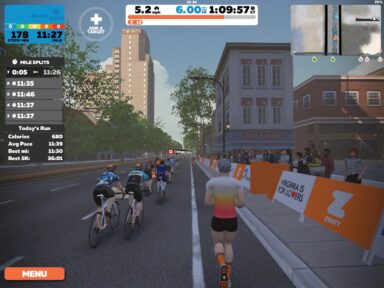
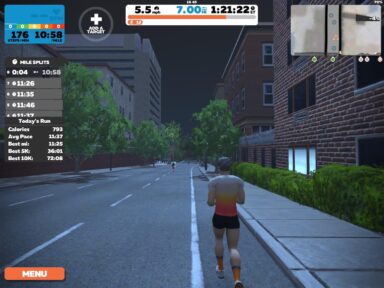
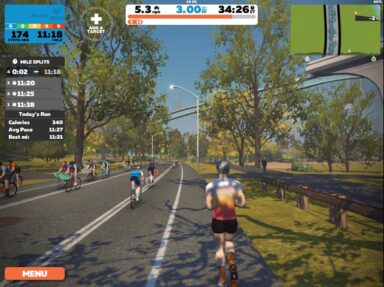
Day 60 and day 30 – the penultimate day – of my January challenge. Today was a struggle. With 15 miles to do I decided to split it into three 5 mile runs, which made it a bit easier. Still tough though, especially after the miles I’ve racked up so far this week!
Bit of a special day today. I finally crossed the border into England! Whoop!
The day’s miles took me through Gretna (crossing into England), through Metal Bridge and our along the smaller lanes to Rockcliffe.
After that I passed Cargo before heading through Carlisle – passing Carlisle Castle, where we visited with the kids while on holiday last year – finishing the day’s route just outside Carlisle.
Gretna’s principal claim to fame arose in 1753 when an Act of Parliament, Lord Hardwicke’s Marriage Act, was passed in England, which provided, among other things, that if both parties to a marriage were not at least 21 years old, consent to the marriage had to be given by the parents. This Act did not apply in Scotland, which allowed boys to marry at 14 and girls at 12, with or without parental consent. In addition, the Act required procedures that gave notice of an impending marriage to the community. As a result, many elopers fled England, and the first Scottish village they reached was often Gretna.
Rockcliffe doesn’t mean ‘cliff by rocks’ or ‘rocky cliff’ as many might think. The name means ‘red cliff’, implying a sandstone cliff-face. The name is from Old Norse rauðr meaning “red” and Old English clif for “cliff”, similar to Radcliffe in Greater Manchester.
By the time of the Norman conquest in 1066, Carlisle was part of Scotland. It was not recorded in the 1086 Domesday Book. This changed in 1092, when William the Conqueror’s son William Rufus invaded the region and incorporated Carlisle into England. The construction of Carlisle Castle began in 1093 on the site of the Roman fort, south of the River Eden. The castle was rebuilt in stone in 1112, with a keep and the city walls. The walls enclosed the city south of the castle and included three gates to the east, south, and north called the Irish or Caldew Gate, the English or Botcher Gate, and the Scotch or Ricker Gate respectively. The names of the gates exist in road names in Carlisle today.
Carlisle Cathedral was founded as an Augustinian priory and became a cathedral in 1133.
In 1157, Carlisle became the seat of the new county of Carliol (a name that was originally an abbreviation of Latin Carlioliensis, meaning “[Bishop] of Carlisle”); in 1177 the county was renamed Cumberland.
One more day for my January challenge. 16 miles left to do this month. It’s been a tough month but when – not if – I finish tomorrow’s 16 miles I’ll definitely be a little bit chuffed with what I’ve achieved this month.
Route
[sgpx gpx=”/wp-content/uploads/gpx/virtual-jogle-day-60.gpx”]
Route Video
Below you can see a video of the route, showing Google Street View images from along the route.

Photos
Some photos from my virtual run.